
© UNAIDS
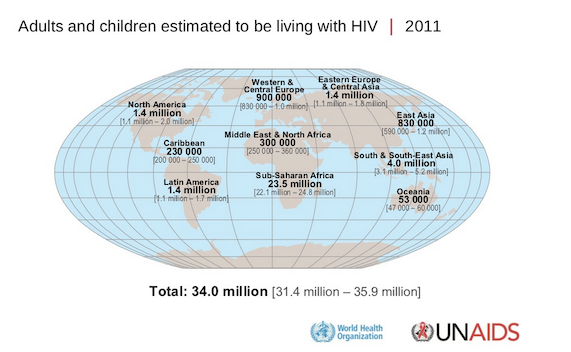
The UNAIDS Report on the Global AIDS Epidemic 2012 was launched today and illustrates the world progress fighting HIV/AIDS over the last decade (2001-2011). There are good news: the report shows a 50% reduction in the rate of new HIV infections in 25 low- and middle-income countries. More than half of these countries are in Sub-Saharan Africa, the region most affected by HIV.
There were more than 700 000 fewer new HIV infections globally in 2011 than in 2001. In some of the countries which have the highest HIV prevalence in the world, rates of new HIV infections have been cut dramatically since 2001. In the last ten years, new HIV infection dropped by 73% in Malawi, 71% in Botswana, 68% in Namibia, 58% in Zambia, 50% in Zimbabwe, 41% in South Africa and 37% in Swaziland, which has the highest HIV prevalence in the world.
There were more than 700 000 fewer new HIV infections globally in 2011 than in 2001. In some of the countries which have the highest HIV prevalence in the world, rates of new HIV infections have been cut dramatically since 2001. In the last ten years, new HIV infection dropped by 73% in Malawi, 71% in Botswana, 68% in Namibia, 58% in Zambia, 50% in Zimbabwe, 41% in South Africa and 37% in Swaziland, which has the highest HIV prevalence in the world.
Since 2009, the numbers of people accessing treatment has increased by 63% globally. The report also shows that in sub-Saharan Africa a record 2.3 million people had access to treatment and that China has increased the number of people on HIV treatment by nearly 50% in the last year alone. As a result of the improved access to antiretroviral therapy, "Sub-Saharan Africa has cut AIDS-related deaths by one third in the past six years", says the report.
"There were more than half a million fewer deaths in 2011 than in 2005", the report says. The largest drops in AIDS-related deaths are seen in South Africa (100 000 fewer deaths than in 2005), Zimbabwe (nearly 90 000 fewer deaths), Kenya (71 000 fewer deaths) and Ethiopia (48 000 fewer deaths than in 2005).
The numbers of people with HIV/TB co-infection accessing antiretroviral treatment has increased by 45%. As a result, a 13% decrease in TB-related AIDS deaths was observed over the last two years. However, the report calls for more action to reduce TB-related AIDS deaths.
Finally, it is important to highlight the remarkable progress that is being made in reducing new HIV infections in children. The report shows that half of the global reductions in new HIV infections in the last two years have been among newborn children. New HIV infections in children decreased by 24% in the last 2 years. According to the report, "in six countries - Burundi, Kenya, Namibia, South Africa, Togo and Zambia––the number of children newly infected with HIV fell by at least 40% between 2009 and 2011". This means that far fewer babies are being born with HIV worldwide.
Read more: UNAIDS Report on the Global AIDS Epidemic 2012

No comments:
Post a Comment