
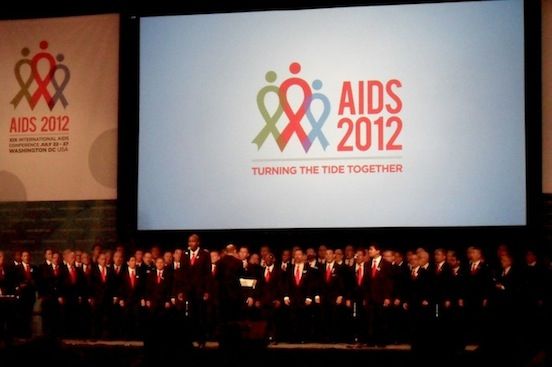
Photo: © Gonçalo Figueiredo Augusto/blog global health
The 19th International AIDS Conference started today in Washington D.C. The biggest world conference dedicated to AIDS will gather about 17,000 delegates from more than 180 countries during the upcoming week. This will be an unique opportunity to discuss the new challenges on the fight against the HIV epidemic, to present the latest scientific knowledge and to "collectively chart a course forward".
The last time the AIDS Conference took place in the United States was in 1990 and San Francisco was the hosting city. Thousands had died during the 1980's, and researchers, scientists, patients and advocates were trying to set up an agenda for the next decade. Wisely, they understood fear and prejudice would be spreading as fast as HIV, so the 6th International AIDS Conference was dedicated to: "AIDS in the Nineties: From Science to Policy". However, in the US, Congress passed legislation that prohibited people with HIV from traveling to the United States. That was the reason why the Conference was away from the US for so long. In 2009, President Obama finally lifted the travel ban and, more than 20 years after San Francisco, the AIDS Conference is back to the USA.
The theme of this year's conference is “Turning the Tide Together” and embodies the hope and optimism of those working for an HIV-free generation. Thanks to advances in modern medicine, HIV is nowadays a chronic and manageable condition. At least, this is the reality in high-income countries. Although access to treatment and prevention strategies are improving around the world, there are still millions living and dying with HIV, mostly in Sub-Saharan Africa. Let's not forget that 69% of all people living with HIV live in Sub-Saharan Africa - including 90% of the world’s HIV-positive children. In 2011, an estimated 1.8 million people in the region became newly infected (71% of all new HIV infections in the world and an estimated 1.2 million adults and children died of AIDS, accounting for 70% of the world’s AIDS deaths.
On the first day of the 2012 AIDS Conference, even before the opening session - which you can fully watch following the link below -, interesting satellite sessions on Pediatric HIV were held.
One of them was conducted by The Elizabeth Glaser Pediatric AIDS Foundation and was dedicated to the “Global Plan Towards the Elimination of New HIV Infections Among Children by 2015 and Keeping Their Mothers Alive” (launched in 2011). Several people from different organizations working on the front line of program implementation in countries such as Kenya, Lesotho, Zimbabwe or Swaziland explained the challenges they face and shared the results of their work.
Another one, held at the same time by IAS-ILF and DNDi, highlighted "the often-neglected drug development needs of children with HIV". It was possible to hear real stories from pediatricians who work in resource-limited settings and the urgent need of a formulation for infants in the developing world. The challenges to develop pediatric formulations for HIV were also discussed during the session.
Read more: Ending Pediatric AIDS and Achieving a Generation Born HIV-Free
Read more: A Journalist’s Guide to Reporting on Pediatric HIV and AIDS (EGPAF)
Read more: Pediatric HIV Treatment Advocacy Toolkit (WHO, UNICEF)
Video: Full Opening Session: XIX International AIDS Conference
The last time the AIDS Conference took place in the United States was in 1990 and San Francisco was the hosting city. Thousands had died during the 1980's, and researchers, scientists, patients and advocates were trying to set up an agenda for the next decade. Wisely, they understood fear and prejudice would be spreading as fast as HIV, so the 6th International AIDS Conference was dedicated to: "AIDS in the Nineties: From Science to Policy". However, in the US, Congress passed legislation that prohibited people with HIV from traveling to the United States. That was the reason why the Conference was away from the US for so long. In 2009, President Obama finally lifted the travel ban and, more than 20 years after San Francisco, the AIDS Conference is back to the USA.
The theme of this year's conference is “Turning the Tide Together” and embodies the hope and optimism of those working for an HIV-free generation. Thanks to advances in modern medicine, HIV is nowadays a chronic and manageable condition. At least, this is the reality in high-income countries. Although access to treatment and prevention strategies are improving around the world, there are still millions living and dying with HIV, mostly in Sub-Saharan Africa. Let's not forget that 69% of all people living with HIV live in Sub-Saharan Africa - including 90% of the world’s HIV-positive children. In 2011, an estimated 1.8 million people in the region became newly infected (71% of all new HIV infections in the world and an estimated 1.2 million adults and children died of AIDS, accounting for 70% of the world’s AIDS deaths.
On the first day of the 2012 AIDS Conference, even before the opening session - which you can fully watch following the link below -, interesting satellite sessions on Pediatric HIV were held.
One of them was conducted by The Elizabeth Glaser Pediatric AIDS Foundation and was dedicated to the “Global Plan Towards the Elimination of New HIV Infections Among Children by 2015 and Keeping Their Mothers Alive” (launched in 2011). Several people from different organizations working on the front line of program implementation in countries such as Kenya, Lesotho, Zimbabwe or Swaziland explained the challenges they face and shared the results of their work.
Another one, held at the same time by IAS-ILF and DNDi, highlighted "the often-neglected drug development needs of children with HIV". It was possible to hear real stories from pediatricians who work in resource-limited settings and the urgent need of a formulation for infants in the developing world. The challenges to develop pediatric formulations for HIV were also discussed during the session.
Read more: Ending Pediatric AIDS and Achieving a Generation Born HIV-Free
Read more: A Journalist’s Guide to Reporting on Pediatric HIV and AIDS (EGPAF)
Read more: Pediatric HIV Treatment Advocacy Toolkit (WHO, UNICEF)
Video: Full Opening Session: XIX International AIDS Conference

No comments:
Post a Comment